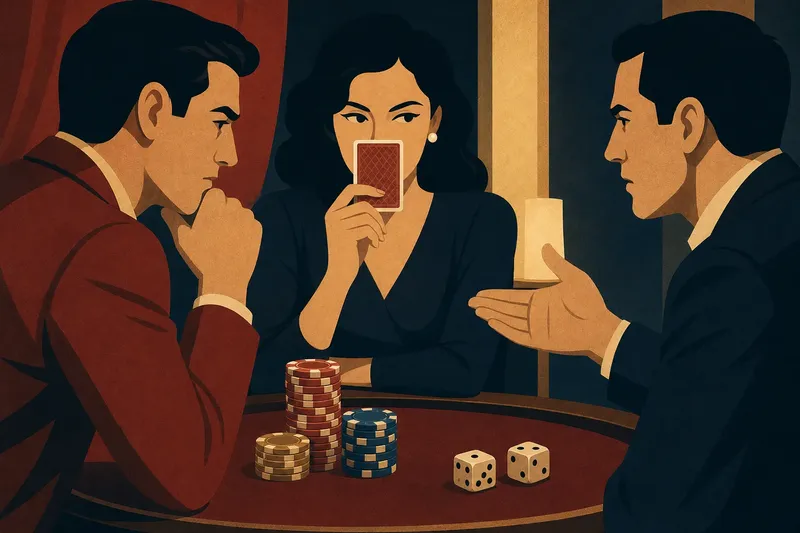
How “Lucky” Turns Chance Into Character in Casino Stories
See how “lucky” works in casino stories: trace who uses the label, how it shapes a character’s reputation, and what it leaves unexplained about chance.
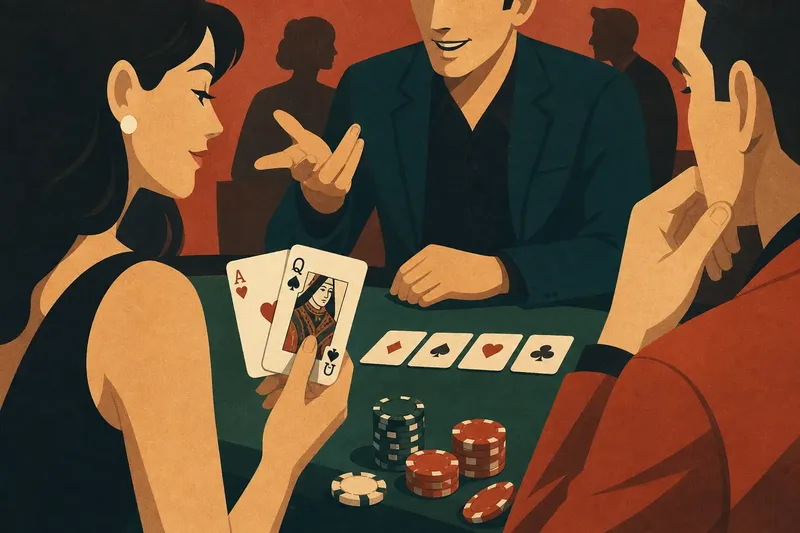
A dealer turns over a card, a player wins, and someone at the table says, “You’re lucky.” In casino stories, “lucky” can turn one outcome into a social label that follows a character into the next scene.
The word can sound like praise, teasing, envy, or a quick explanation. Its force comes not only from the result, but from who says it and how the others respond.
How does “lucky” become a character label?
“That was a lucky draw” points to one moment. “You’re lucky” reaches beyond it, making good fortune sound like a personal quality. In dialogue, that small grammatical shift can give a character a reputation without settling what the word means.
A friend might use the label warmly; a rival might use it to suggest that a win was undeserved. The person addressed could accept it, reject it, or play along. Each response shapes the scene’s social temperature.
Listen for the word’s job in the exchange. Is it a toast, a jab, an expression of envy, or a way to keep a conversation moving? The surrounding lines and reactions help establish its tone.
What does the label do to a casino story?
Once characters repeat “lucky,” it can become shorthand for how they see someone. The label may make a winner seem favored, or let a rival minimize that person’s success. The story’s tension comes from these competing attitudes, not from the word settling the cause of an outcome.
Timing matters, too. If a character called lucky faces a setback in a later scene, the contrast can reveal how quickly the group’s story about them changes. A brief label becomes a thread connecting scenes.
Nearby words sharpen the effect. “Skill” points toward ability; “deserve” makes a judgment about fairness; “fate” suggests a larger force. When these terms appear alongside “lucky,” note whether the characters agree, argue, or simply talk past one another.
What does “lucky” mean in casino stories?
Who uses the label?
Identify the speaker before deciding how the word lands. A friend, rival, narrator, or the character themself may use “lucky” with a different tone and purpose.
What reaction follows?
Notice whether the person smiles, objects, stays silent, or changes the subject. That response can show whether the label feels welcome, irritating, or simply unremarkable.
Does the word return later?
Repeated dialogue or behavior can make “lucky” part of a character’s reputation. If it disappears after one remark, it may be a passing reaction rather than a lasting feature of the story.
What other words frame the scene?
Look for terms such as “skill,” “deserve,” “risk,” and “fate.” Their presence can reveal which ideas the characters bring to the moment, even if they never agree on an explanation.
How can you describe “lucky” precisely?
Attribute the judgment to its speaker. “Her friend calls her lucky” reports what he says; “the scene casts the win as fortunate” describes a storytelling choice. Saying “she is lucky” without qualification can make a character’s opinion sound like the story’s settled view.
Small details can help distinguish tones: a grin, a pause, a refusal to answer, or a change of subject. Describe the detail and its effect on the exchange without claiming to know a character’s private motive.
Say a fictional scene begins with Lena drawing a card and winning a hand. Her friend calls her “the lucky one,” and she asks whether he would use the same phrase if she had lost. The win, the label, and the question give the reader a concrete chain of events; the exchange makes the label sound less neutral, while leaving its broader meaning open.
Think of “lucky” as a sticky note on a box: it marks one impression without describing everything inside. When writing about the word in casino stories, specify whether it praises a moment, assigns a social identity, or does both. That phrasing keeps the character’s language vivid without turning it into the narrator’s verdict.