Why Casino Film Scenes Make the Room Feel Like a Character
See how casino film scenes use framing, lighting, sound, and set design to turn a location into an active dramatic presence without stealing a character’s agency.
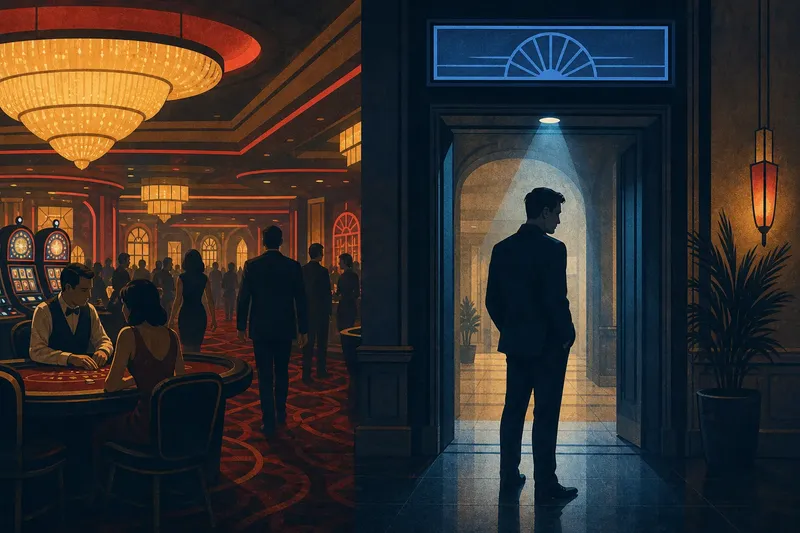
A character crosses a bright casino floor, then stops beneath a doorway light while the music carries on behind them. In casino film scenes, that pause can make the room feel like a character: not because the set has intentions, but because the film gives it a presence that presses against the human one.
How does the camera give the room a point of view?
Framing decides what the audience sees and what remains just outside the image. A wide shot can make a lone figure look small against a sweep of tables and lights; a tight shot can shut out that spectacle and hold attention on a face, a hand, or a glance toward the exit.
The camera can also make a room seem to watch. A character reflected in a mirror, framed by a doorway, or glimpsed between moving figures may appear observed even when no other character is visibly paying attention. That impression comes from composition, not from a literal point of view belonging to the room.
Notice when the camera stays still and lets the character cross the frame, or follows the character through the space. The first choice can make the setting feel fixed and imposing. The second can make the room feel like a passage the character is trying to master.
How do light, color, and architecture build presence?
Set design gives the camera shapes to work with: a corridor that narrows toward a door, a mirror that divides the image, or a ceiling that hangs over a crowded floor. Lighting and color then guide the eye through those shapes. A bright sign may pull attention away from a conversation, while a dark stretch of wall can make a character’s face stand out.
Repeated visual contrasts can make a location feel less like background and more like a force in the scene. Think of the set as a picture frame: it does not decide what happens inside it, but its edges influence what the viewer notices first.
Say an invented scene begins with a character standing beneath a red sign, then returns to the same composition after an argument. If the character now appears at the edge of the frame, the expected visible effect is a changed balance between person and place. That can support a reading of estrangement without claiming the sign has a fixed meaning.
How can sound make an empty shot feel occupied?
Sound can keep a casino present after the camera leaves its main floor. Music or crowd murmur continuing over a hallway image links the two spaces; a sudden quiet can make a small gesture seem exposed. A sound bridge—the continuation of audio across a cut—can make the location feel larger than the frame.
Listen for the mix as well as the source. If background sound grows louder while a character hesitates, the shift may draw attention to the pressure of the moment. If it fades, the scene may isolate the character from the surrounding activity. The effect depends on what the film has established and how the sound changes.
Why does a casino setting feel like a character?
Can a setting seem to oppose a character?
Yes, through choices such as blocked sightlines, a crowded frame, or a doorway that stays in view. These choices can make the character’s route seem difficult without giving the room literal intentions.
What does a repeated casino image do?
A returning sign, mirror, or corridor gives the viewer a point of comparison. Look at what has changed around it before deciding whether the recurrence marks a shift in the story.
Can sound give a room a presence offscreen?
Yes. Audio that continues over a hallway or exterior shot can connect that image to the casino floor, while silence can make the separation feel pronounced.
How do I describe the effect without overstating it?
Name the visible or audible choice first, then describe its possible effect on the scene. “The camera holds the exit in frame while the character pauses” is an observation; “the room traps the character” is an interpretation.
Which details make the setting feel active?
Use these checks to decide what the film is doing with its space. For every item, let the observed detail determine the next move:
- Frame size: Check whether the shot shows the whole room or crops it tightly. If the room dominates the frame, discuss scale; if it does not, focus on the detail the tighter image emphasizes.
- Character placement: Check whether the character is centered, pushed to an edge, or partly obscured. If the placement changes, compare the before-and-after compositions; if it stays stable, avoid claiming the frame signals a new relationship.
- Route through the set: Check whether a doorway, corridor, or passing figure interrupts the character’s path. If it does, describe the visual obstacle; if the way remains clear, consider how the open route affects the moment instead.
- Light and color: Check which source draws the eye, such as a lamp, sign, or reflected glow. If attention shifts toward it, connect that shift to the composition; if it does not, leave the color as a descriptive detail.
- Returning image: Check whether a sign, mirror, or threshold appears again. If it returns, compare its framing and context; if it does not, look for another recurring image rather than inventing a pattern.
- Sound across a cut: Check whether music, voices, or crowd noise continues after the image changes. If it does, explain how it links the spaces; if it stops, consider what the new quiet makes easier to hear or notice.
Imagine an invented scene with these starting details: a character enters through a doorway beneath a blue sign, crosses a room while figures move behind them, argues beside a wall mirror, and returns to the same doorway. First, record the entrance and exit as two appearances of the same threshold; the resulting comparison supports a reading of return, though it does not establish that the character’s situation is unchanged. Next, note the moving figures in the crossing shot; if the character remains still while they pass, the visible contrast makes the pause stand out. Then compare the mirror shots: suppose the first shows one reflection and the second divides the character’s face at the mirror’s edge. That change gives the argument a visual echo of division, but the scene does not state what the character feels. The resulting reading is specific: framing, movement, and repetition make the casino setting feel present in the conflict, while the character still makes the choice to leave.
When you write about casino film scenes, treat the room’s presence as a film effect built from framing, sound, and set design. Point to the particular choices that create it, and leave the character’s decisions with the character.