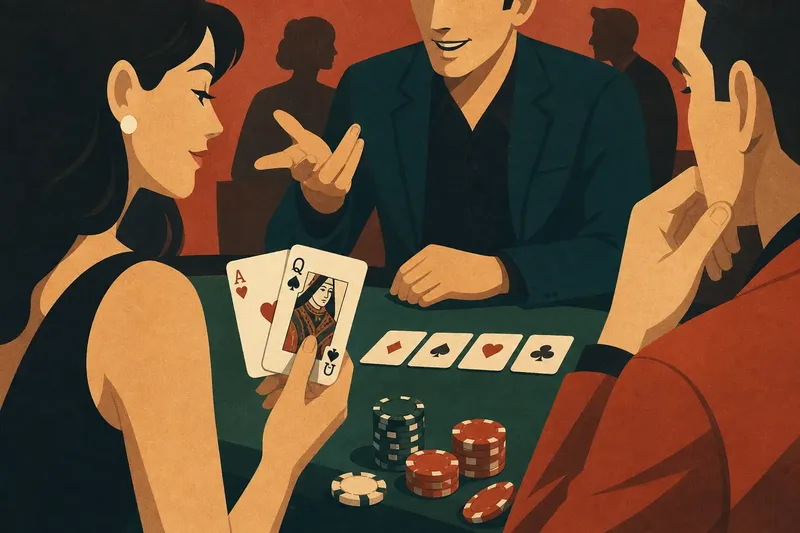
Playing Cards, Chips, or Dice: Which Casino Prop Carries the Plot?
Compare playing cards, chips, and dice in casino scenes to match a prop to the conflict, clarify a character’s choice, and give each beat a visible turn.
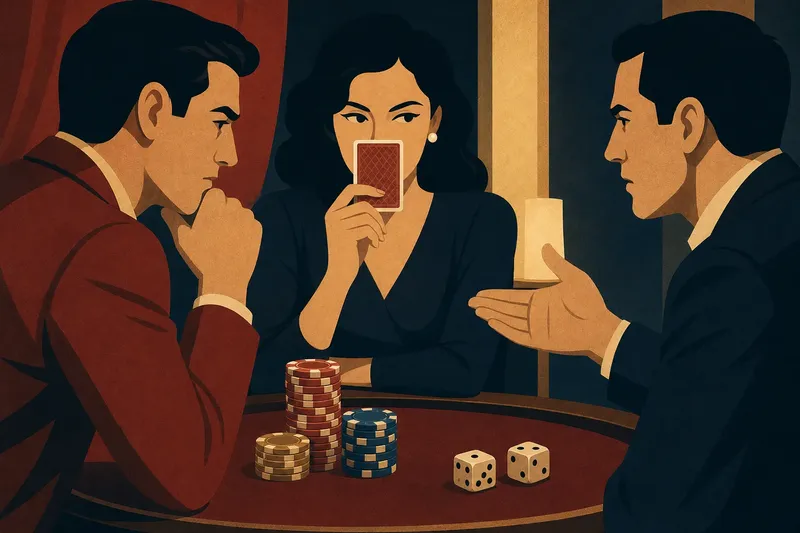
A writer sets a deck, a few chips, and a pair of dice on a table, then realizes the scene cannot give each object equal weight. Choosing a casino prop for a fictional scene starts with the conflict: cards conceal information, chips make commitment visible, and dice put a roll at the center.
What does a card let a character hide?
A card creates suspense through withheld information. A character can protect a hand, study it, fold, or reveal it. The audience watches not only the card but also the gap between what one person knows and what another suspects.
Use cards when the dramatic question is about judgment with incomplete information: Will someone trust a signal, keep a secret, or expose a bluff? The important action is often the pause before a reveal. A card turned face up can change the conversation; a card kept hidden can keep the power imbalance alive.
Cards do not have to signal deception. They can also make patience or indecision visible. The character’s gestures and the scene’s stakes give the object its meaning.
When do chips make a stronger dramatic choice?
Chips give a commitment a physical form. A character can count them, rearrange a stack, hold one back, or push it toward another player. The sound of a chip landing can punctuate a line of dialogue, while a hand hovering over a stack can delay a decision.
Choose chips when the conflict turns on what someone is prepared to commit or who appears to control the terms. A neat stack and a scattered pile can suggest contrasting approaches to the moment, but neither one establishes what a real player is like. In fiction, the scene must show how other characters interpret the gesture.
Chips can also mark a shift in a conversation: a character makes a visible offer, another accepts or refuses, and the exchange takes a new direction. If moving a chip changes nothing, the action may be visual decoration rather than a dramatic beat.
What kind of uncertainty do dice put on screen?
Dice make the act of surrendering control visible. The roll has a clear physical arc: a hand releases the dice, they tumble, and the characters respond to the result. That movement can create a brief pause without requiring a hidden card or a long explanation.
Dice suit a conflict in which characters agree to accept an uncertain outcome, tempt fate, or argue over whether chance should decide. One character might toss the dice casually while another refuses to touch them. That contrast can sharpen their different attitudes toward the same risk.
A roll needs a consequence the audience can follow. It might settle whether a character keeps talking, changes an offer, or walks away. If the result does not affect what anyone knows or does next, the dice have no clear dramatic job.
How can you choose a casino prop for a scene?
Start with the character’s decision, then pick the object that makes its turning point visible. A prop is like a desk lamp: it directs attention to one part of the action, but it does not supply the story’s conflict.
- Check for hidden information: If a character can conceal or reveal something that changes another person’s decision, use cards; if no information is being withheld, consider chips or dice instead.
- Check for a visible commitment: If someone’s offer or refusal should be seen, use chips; if the scene centers on a secret, use cards, and if it centers on a roll, use dice.
- Check whether chance decides the next move: If the characters accept a roll’s result, use dice; if a person’s choice matters more than the result, choose cards or chips.
- Check who handles the object: If one character’s touch or avoidance changes the power dynamic, assign that gesture to the prop; if every character handles it the same way, revise the blocking or choose a more useful object.
- Check what changes afterward: If the prop changes a decision, relationship, or offer, keep it; if nothing changes, give the action a consequence or remove the prop.
- Check whether several props repeat one beat: If each object signals a different turn in the conflict, keep them; if they all show the same kind of risk, use the clearest one and cut the rest.
Say a writer begins with two former partners who disagree about trusting a newcomer. The newcomer holds a card close, and the partners cannot see its face; that choice makes the dispute about withheld information. The writer then considers pushing a chip across the table: the gesture changes the focus to whether one partner will commit to an offer. Finally, the writer considers a dice roll, but decides the partners would not accept chance as a fair judge. The finished scene uses the card, because its hidden face directly shapes what the partners can know and decide; the chip and dice would shift the conflict toward different questions.
Which questions help settle a casino prop choice?
Can one casino prop carry more than one meaning?
Yes. A chip might suggest an offer, a challenge, or an attempt to control the exchange, depending on who moves it and how others respond. Give the gesture a clear consequence so its ambiguity feels intentional.
Do playing cards always signal deception?
No. Cards can focus attention on patience, calculation, or a decision made with incomplete information. The character’s behavior determines which meaning the scene supports.
Are dice useful when a scene needs a quick turning point?
They can create a compact action with a visible result. The roll earns its place only if that result changes a character’s next move or the terms of the conflict.
Can cards, chips, and dice all appear in one scene?
Yes, if each marks a distinct change rather than repeating the same beat. For instance, a card can conceal information, a chip can show a commitment, and dice can decide an outcome the characters have agreed to accept.
How does the prop shape the final beat?
Let the chosen object carry the decision the scene cannot express as clearly through dialogue alone. A card can stay hidden after a character withdraws; a chip can remain between two people after an offer is refused; dice can settle while the characters disagree about what the result means. For a story about casino settings, that specific physical aftermath makes the prop choice legible—and keeps the focus on the conflict the scene is built to show.